
When you're considering digital hearing aids as a senior, you have several options that can greatly improve your quality of life. Behind-the-ear (BTE) aids offer power and ease of maintenance, while in-the-ear (ITE) aids provide a custom fit for comfort. Completely-in-the-canal (CIC) aids are ideal if you prefer minimal visibility. Features like noise reduction, Bluetooth connectivity, and rechargeable batteries enhance your experience. But how do you choose the right device for your specific needs? Let's explore the details of these hearing aids to find the perfect fit for you.
Key Takeaways
- Top Digital Hearing Aids for Seniors:
- Behind-the-Ear (BTE): Suitable for severe hearing loss, offers more power, and is easier to maintain.
- In-the-Ear (ITE): Custom-molded fit, less visible, and potentially more comfortable than BTE.
- Completely-in-Canal (CIC): Minimal visibility, fits deep in the ear canal, but may offer limited power.
- Receiver-in-Canal (RIC): Combines BTE and ITC styles, offers a natural sound, and is less visible.
- Professional Assessment: Essential for determining specific hearing needs through an audiologist consultation to ensure the best fit and functionality.
Types of Digital Hearing Aids
Digital hearing aids come in various styles to cater to different needs and preferences. You've got options like behind the ear (BTE), in the ear (ITE), and even completely in the canal (CIC) models. Each style has its own set of benefits and drawbacks, so let's explore the details.
Behind the ear hearing aids are pretty self-explanatory – they sit behind your ear with a tube connecting to an earpiece in your ear canal. These are great for people with severe hearing loss because they can pack more power. Plus, they're often easier to handle and maintain.
In the ear hearing aids, on the other hand, are custom-molded to fit snugly inside your ear. They're less visible than BTEs and can be more comfortable for some users. However, they might not be as powerful as their BTE counterparts. There are also different types within this category, like full-shell and half-shell models, so you can choose the one that suits you best. Whatever style you pick, the goal is to find a hearing aid that you're comfortable with and that enhances your ability to hear and communicate.
Benefits for Seniors
As a senior, getting digital hearing aids can greatly boost your quality of life. Not only do these advanced devices amplify sound, but they can also enhance your cognitive function and help you stay more connected socially. By making conversations clearer and reducing the strain of listening, digital hearing aids can make everyday interactions more enjoyable and help you live a more vibrant life.
Enhanced Quality of Life
Enhanced quality of life is a significant benefit that digital hearing aids offer seniors. Let's face it, hearing loss can be a real downer, making everyday conversations feel like a chore and social gatherings a source of anxiety. But with the right hearing aids, you can turn that around and start enjoying life again.
Digital hearing aids can help you engage in social activities without feeling left out or struggling to keep up. Imagine being able to hear your grandkids' laughter, understand your friends' jokes, and participate in conversations without feeling like you're missing out. It's a game-changer.
Moreover, digital hearing aids can also make daily activities easier and more enjoyable. Whether it's watching TV, cooking dinner, or taking a walk, being able to hear clearly can make a big difference. You'll be more aware of your surroundings, more confident in your interactions, and more connected to the people and things that matter most. So why wait? Get fitted for digital hearing aids and start living your best life. Your hearing – and your social calendar – will thank you
Improving Cognitive Function
Improving cognitive function is a crucial benefit that hearing aids offer seniors. By enhancing auditory processing, these devices help keep your brain active and engaged. Cognitive stimulation is essential for maintaining mental health and preventing cognitive decline. Here's how hearing aids can help:
- Better Communication: Hearing aids improve your ability to understand conversations, reducing social isolation and loneliness.
- Increased Safety: Enhanced hearing helps you stay alert and aware of your surroundings, reducing safety risks.
- Preserved Cognitive Function: Studies have shown that hearing aid use can slow cognitive decline and maintain executive function.
- Improved Emotional Well-being: Better hearing leads to increased participation in social activities, promoting emotional well-being and independence.
Choosing the Right Device
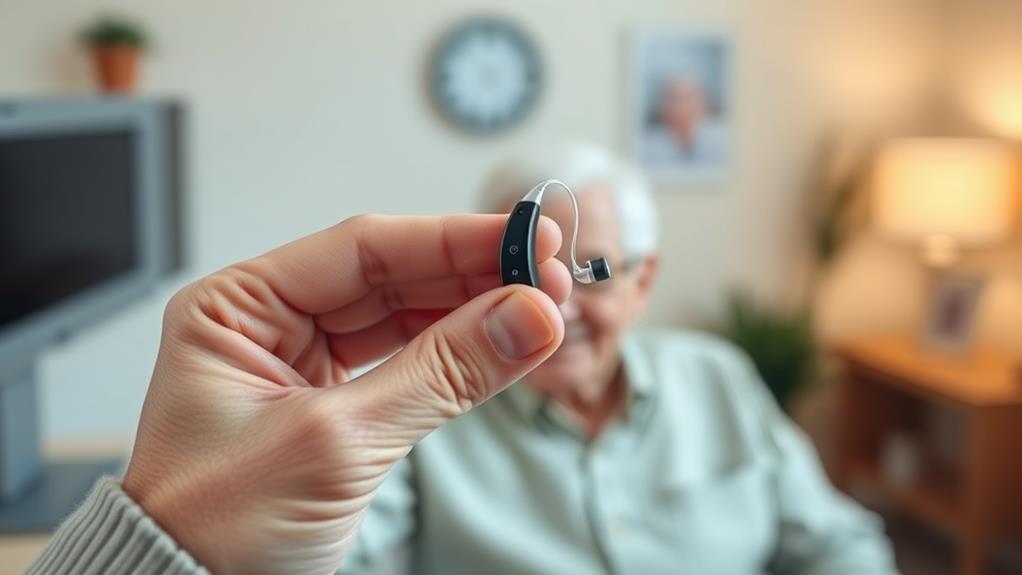
Choosing the right digital hearing aid can be a game-changer for seniors. You need to understand your specific hearing needs, so get a professional assessment to figure out what works best for you. Then, consider key features like rechargeable batteries, wireless connectivity, and noise reduction – these can make a huge difference in your daily life.
Understanding Hearing Needs
When selecting a digital hearing aid, understanding your hearing needs is essential. It's not just about picking any device; you need to take into account your personal hearing requirements and how they impact your daily life.
Here are some key points to take into account:
- Get Professional Guidance: Consult an audiologist for a hearing assessment to determine the extent of your hearing loss. This will help you choose a device that matches your needs.
- Your Lifestyle Matters: Think about your daily activities. If you're active or enjoy watching TV and talking on the phone, you might want features like water resistance or Bluetooth connectivity.
- Easy to Use: Consider your dexterity when choosing hearing aids. Some styles, like behind-the-ear models, are easier to handle, especially if you have arthritis.
- Stay Connected: Make sure your hearing aid supports your communication strategies, such as speech-to-text apps or phone pairing for better call quality.
Key Features to Consider
Considering the vast array of digital hearing aids available, it's crucial to focus on the key features that align with your specific needs. Let's cut to the chase—what makes a hearing aid great for a senior like you?
First off, adjustable settings are a must-have. You want to be able to tweak the sound to suit your environment, whether you're in a quiet library or a noisy restaurant. Noise cancellation is another biggie. It helps you focus on the conversation and not the background chatter. Then there's battery life—look for hearing aids that can go the distance without needing a recharge every few hours. Bluetooth connectivity is cool too; it lets you stream your favorite tunes or shows directly into your ears.
Comfort design is key—your hearing aid should be so comfy you forget it's there. A user-friendly interface is also important; you don't want to be fiddling with complicated buttons and menus. Some hearing aids come with a remote control, which is handy if you want to adjust settings without touching your device. Finally, personalization options are a plus, allowing you to tailor your hearing aid to your unique needs.
Professional Guidance
Steering through the vast array of digital hearing aids requires professional guidance to ascertain you select the device that best suits your needs. It's indispensable to have an audiologist guide you through this process to confirm the chosen device aligns with your specific hearing requirements.
Here are some key points to contemplate when seeking professional guidance:
- Get a Thorough Hearing Assessment: This is the first step in determining the extent of your hearing loss and what kind of device you need.
- Consult an Audiologist: Their expertise will help you navigate the various types of hearing aids and their features.
- Discuss Your Needs: Share your lifestyle, preferences, and any challenges you face with hearing aids, such as dexterity issues.
- Explore Financing Options: Many organizations offer financial assistance for hearing aids, which your audiologist can help you find.
Features and Technologies
Digital hearing aids for seniors come equipped with a variety of features and technologies designed to enhance auditory experiences. These devices are not just about sound amplification; they're packed with advanced technologies like wireless connectivity, which lets you stream music or take calls directly from your smartphone to your hearing aids.
| Feature | Description | Benefits |
|---|---|---|
| Wireless Connectivity | Streams audio from your phone, TV, and computer | Better sound quality, easier to connect |
| Sound Amplification | Boosts weak sounds to make them clearer | Improves speech understanding, reduces strain |
| Noise Reduction | Filters out background noise | Enhances speech clarity, reduces distractions |
| Telehealth Support | Remote adjustments and fittings | Convenient, saves time and travel |
These features are designed to make your life easier. Wireless connectivity means you can enjoy your favorite shows or chat with loved ones without the hassle of cords. Sound amplification is essential for understanding speech in noisy environments. Noise reduction helps you focus on what matters most – the conversation. And telehealth support means you can get help without leaving your home. These technologies are here to help you stay connected and engaged.
Cost and Insurance Coverage
Maneuvering the cost and insurance coverage for digital hearing aids can be challenging. Let's break it down for you.
First, the cost of hearing aids can vary widely, from $297 to $6,500 for a pair, depending on the technology, features, and brand. Now, about insurance: traditional Medicare doesn't cover hearing aids, but some Medicare Advantage programs and federal or private health insurance plans might.
Here are some key points to take into account:
- Affordability Options: Look for financing options offered by some manufacturers and retailers. Organizations like Help America Hear and the Hearing Industries Association provide financial assistance and guides on negotiating prices.
- Insurance Policies: Check if your insurance plan covers any part of hearing aid costs. Some plans offer limited hearing benefits.
- OTC vs. Prescription: Over-the-counter (OTC) hearing aids are generally cheaper but might offer fewer features and less customization.
- Lifetime Costs: Reflect on the cost per day over the life of the hearing aid, usually five years, to see the long-term value.
Stay informed about changes in insurance coverage and new affordability options to find the best hearing aid for your needs and budget.
Professional Fitting and Support
Professional fitting and support are integral components of the hearing aid experience. You wouldn't buy a pair of glasses without an eye exam, right? Same thing here – a proper hearing assessment is essential to find the perfect hearing aid for you. Audiologists and hearing aid specialists are the pros who'll help you navigate this process. They'll conduct thorough hearing assessments to identify the type and degree of your hearing loss, and then recommend the best hearing aid for your specific needs.
Once you've got your hearing aid, follow-up care is just as important. Your audiologist will help you adjust to your new device, making sure it's comfortable and working correctly. They'll also be there for any future tweaks or issues that might arise. Don't be afraid to ask questions or report any problems – they're there to support you every step of the way. Remember, a hearing aid is a big investment, and professional fitting and support are key to making it worth every penny. It's all about getting the best possible outcome for your hearing health.
Conclusion
Wrapping up the hunt for the best digital hearing aids for seniors, you've got some solid options to evaluate. BTE aids are all about power and easy maintenance, ITE aids offer a custom fit for comfort, and CIC aids are perfect for those who want to keep things discreet. With features like noise reduction, Bluetooth connectivity, and rechargeable batteries, these devices can greatly enhance your quality of life. So, pick the one that suits you best and start hearing the world clearer.