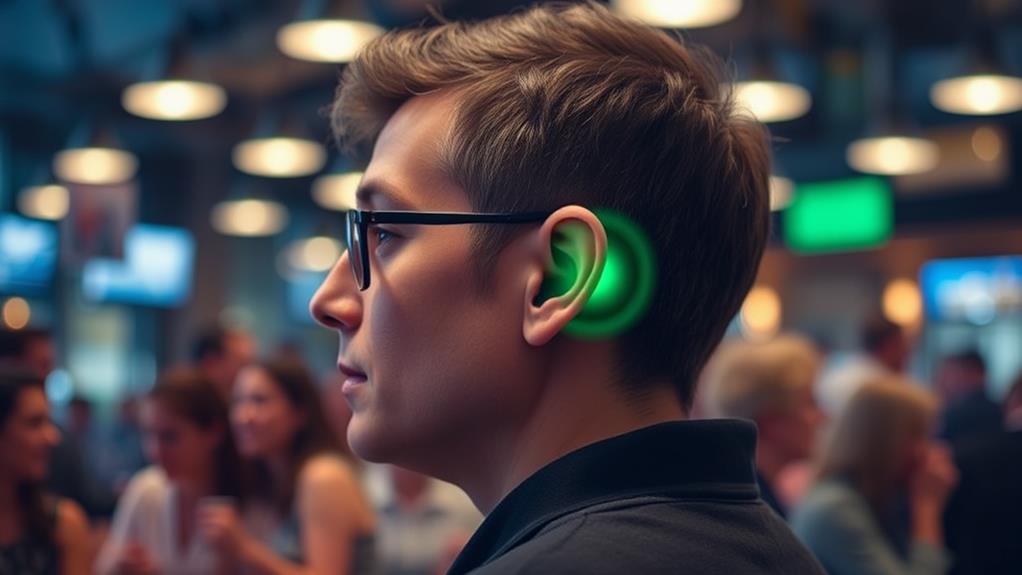
When you’re trying to focus on a conversation in a noisy environment, hearing aids can be a game-changer. Features like adaptive directional microphones, noise reduction technology, and speech enhancement features work together to help you tune in to what matters and tune out the background noise. But how do these features actually work, and which ones are most effective? Let’s take a closer look at the technology behind hearing aids that reduce background noise, and explore how they can improve your listening experience in even the most challenging environments.
Key Takeaways
- Adaptive Directional Microphones utilize two or more microphones to focus on sounds from the front while minimizing those from behind or beside.
- Digital Noise Reduction (DNR) identifies and reduces unwanted background noise for clearer speech focus through advanced algorithms.
- Modulation-Based Systems analyze and adjust noise and speech levels in real-time to prioritize clear speech over background noise.
- AI Integration enhances noise reduction technology for improved audio clarity and adapts to various environments for personalized listening experiences.
- Speech Enhancement Algorithms automatically suppress background noise while enhancing speech to improve sound localization and conversations in noisy settings.
Adaptive Directional Microphones
Adaptive directional microphones are a key feature in hearing aids designed to reduce background noise and enhance speech intelligibility. You know how frustrating it is when you can’t hear your friend’s voice over the din of a busy restaurant? That’s where these microphones come in. They focus on amplifying sounds coming from in front of you, more than sounds behind or next to you, by using two or more microphones placed at a distance from each other. This clever setup helps your hearing aid determine the sound’s arrival time and direction, allowing it to zoom in on the speech signal and reduce background noise. Additionally, AI-powered noise reduction works in tandem with these microphones to dynamically adapt to varying soundscapes, providing an even more natural listening experience.
The adaptive part means these microphones can automatically adjust to different listening situations, like when you’re in a car and the speech signal isn’t always coming from the front. They can even pick up a new speech signal, like the waiter’s voice, and expand your listening area without you needing to turn your head. This technology is a game-changer for hearing aid users, making it easier to follow conversations in noisy environments and reducing distracting ambient sounds.
Noise Reduction Technology
Noise reduction technology is a critical feature in modern hearing aids that helps you navigate noisy environments with ease. Let’s dig into how this tech works its magic.
Noise reduction technology automatically analyzes and adjusts sound levels to enhance speech clarity and reduce ambient noise. This means you can focus on the conversation, not the background chatter. For instance, advanced noise reduction works alongside directional microphones to improve sound clarity by identifying and suppressing background noises. Here are four ways noise reduction technology helps:
- Digital Noise Reduction: This system identifies and reduces unwanted background noise, making it easier to hear what matters.
- Impulse Noise Reduction: This feature softens sudden, loud noises like rattling dishes or keyboard typing, making listening more comfortable.
- Wind Noise Reduction: Perfect for outdoor enthusiasts, this tech reduces wind noise, so you can enjoy the great outdoors without it.
- Modulation-Based Systems: These systems analyze noise and speech levels, adjusting sound in real-time to enhance clarity and reduce distractions.
With noise reduction technology, you can enjoy clearer sound and less frustration in noisy environments. It’s like having a personal sound engineer in your ear, only better.
Speech Enhancement Features

When you’re in a crowded room, you want to be able to focus on the conversation, not the background chatter. That’s where speech enhancement features in hearing aids come into play. These features use advanced algorithms to separate speech from noise, helping you understand conversations more clearly, even in noisy environments. Advanced hearing aids equipped with AI technology take it a step further. They use machine learning algorithms to adapt to different listening environments and optimize speech clarity. This technology helps improve speech clarity and sound localization, making it easier to pinpoint where sounds are coming from. With speech enhancement, you can enjoy more natural conversations, even in places like restaurants or busy streets.
Advanced hearing aids equipped with AI technology take it a step further. They use machine learning algorithms to adapt to different listening environments and optimize speech clarity. These devices can automatically suppress background noise and enhance speech, ensuring clearer conversations even in challenging situations. Whether you’re at a party or in a meeting, speech enhancement features help you stay connected and engaged.
Digital Signal Processing
You’re probably wondering how hearing aids can magically reduce background noise – well, it’s all thanks to Digital Signal Processing (DSP). DSP is like a super-smart computer chip that takes in sound, breaks it down into tiny bits, and then puts it back together in a way that’s tailored just for you. This means that it can amplify the good stuff (like conversations) and minimize the bad stuff (like background chatter), making it a game-changer for people who struggle to hear in noisy environments.
Noise Reduction Techniques
Frequently, digital signal processing techniques play an essential role in noise reduction within hearing aids. These advanced methods help you tune in to what matters and tune out the rest.
Here’s how it works:
- Digital Noise Reduction (DNR): This system analyzes the sound environment and reduces unwanted noise, making conversations clearer in noisy settings.
- Impulse Noise Reduction (INR): INR softens sudden, loud noises like dishes clattering or keyboard typing, enhancing listening comfort.
- Wind Noise Reduction (WNR): Perfect for outdoor activities, WNR detects and minimizes wind noise, ensuring a more pleasant listening experience.
- Modulation-Based Systems: These systems differentiate between speech and noise signals, automatically adjusting volume levels to prioritize clear speech over background noise.
These technologies, combined with passive noise isolation and environmental sound awareness, greatly improve your ability to focus on important sounds while minimizing distractions. Leveraging digital signal processing, you can enjoy a more comfortable and effective hearing experience.
Signal Processing Algorithms
Digital signal processing (DSP) algorithms are the core of modern hearing aids, enhancing sound quality and speech comprehension by leveraging advanced computational techniques. These algorithms help reduce background noise, making it easier for you to focus on what matters—like conversations with friends and family.
Here’s a breakdown of how DSP algorithms work their magic:
| Signal Processing Steps | What It Does |
|---|---|
| Signal Analysis | Breaks down sound into smaller parts to identify noise patterns. |
| Noise Reduction | Uses algorithms to filter out background noise, enhancing audio clarity. |
| Signal Enhancement | Boosts speech signals to improve comprehension and overall sound quality. |
Think of DSP algorithms like a personal sound engineer, constantly tweaking and adjusting the audio to guarantee you hear the best possible sound. They’re like having a superpower in your ear, working tirelessly to reduce background noise and improve audio clarity. With DSP algorithms, you can enjoy better conversations, clearer TV shows, and more immersive music experiences. So, what are you waiting for? Harness the power of DSP algorithms and take control of your hearing today.
Artificial Intelligence Integration

You’re probably tired of background noise ruining your conversations, right? Well, AI integration in hearing aids is here to save the day. With noise reduction technology and AI sound filtering, you can finally focus on what matters – the person talking to you, not the blender in the background.
Noise Reduction Technology
Noise reduction technology, particularly when integrated with artificial intelligence (AI), considerably enhances the clarity and intelligibility of audio signals. This feature is a game-changer for those who struggle to hear in noisy environments.
When you’re in a crowded restaurant or a busy street, it can be tough to make out what others are saying. Background noise can be overwhelming, and it’s even more challenging for people with hearing loss. However, with the advancement of noise reduction technology, you can now enjoy clearer conversations and less listening fatigue.
Here are some key benefits of noise reduction technology in hearing aids:
- Digital Noise Reduction: This system identifies and reduces unwanted background noise, making it easier to focus on speech.
- Impulse Noise Reduction: This feature softens sudden, loud noises like rattling dishes or typing on a keyboard.
- Wind Noise Reduction: This is perfect for outdoor activities, reducing the amplification of wind noise.
- Modulation-based Systems: These systems analyze and adjust noise and speech levels, ensuring a comfortable listening experience.
AI Sound Filtering
AI sound filtering is revolutionizing the way hearing aids process audio signals, making it easier for users to focus on speech in noisy environments. With this technology, you can expect a more personalized listening experience as AI algorithms differentiate between speech and background noise, amplifying the voices you want to hear while suppressing unwanted sounds. For example, in a bustling restaurant, AI sound filtering helps you tune in to your friends’ conversations and tune out the clinking glasses and murmurs in the background.
This advanced sound filtering technology continuously adapts to your sound environment, ensuring that you hear what’s important and not what’s not. This means that whether you’re in a quiet library or a noisy street, your hearing aids adjust in real-time to enhance your user experience. By leveraging AI, hearing aids can now learn your preferences and habits, tailoring the sound settings to make your life easier and more enjoyable. So, embrace the future of hearing aids and let AI sound filtering do the heavy lifting for you.
Bluetooth Connectivity
Bluetooth connectivity is a key feature in modern hearing aids that greatly enhances the user experience. With Bluetooth, you can pair your hearing aids with various devices like smartphones, TVs, and computers, allowing you to stream audio directly into your ears. This means you can enjoy hands-free phone conversations, listen to your favorite TV shows at your own volume setting, and even use mobile apps designed specifically for Bluetooth hearing aids.
Here are four cool ways Bluetooth connectivity makes your life easier:
- Stream Anything: Connect to your smartphone or computer and stream phone calls, music, or video chats directly to your hearing aids.
- Personal Volume Control: Adjust the volume of your TV or computer to your liking without disturbing others around you.
- Wireless Accessories: Use remote controls or voice assistants like Siri or Google Assistant to manage your hearing aids.
- Extend Battery Life: Many Bluetooth hearing aids come with features like low-power modes to help manage battery life, ensuring you stay connected longer.
Automatic Volume Control

Automatic Volume Control
You’re probably wondering how hearing aids can automatically adjust their volume to reduce background noise. Well, the magic lies in their advanced technology. Modern hearing aids can automatically increase or decrease the volume based on pre-programmed settings and your pre-recorded environment. This means that if you’re in a noisy restaurant, your hearing aids will lower the volume, and if you’re in a quiet conversation, they’ll increase it. You can even save these settings for your convenience.
Contemporary hearing aids come with switches, wheels, or buttons that allow you to modulate the volume yourself. Your audiologist can configure these to include memory functions and automatic volume adjustment. Some hearing aids can even sync with your smartphone, allowing you to adjust the volume remotely using an app. This feature guarantees that your hearing aids always provide the best listening experience based on your user preferences and user comfort. With automatic volume control, you can enjoy a more comfortable and clear hearing experience in any environment.
Feedback Suppression Systems
Tackling background noise in hearing aids involves more than just automatic volume control. You also need to address feedback suppression systems. These systems are essential because they help eliminate the annoying whistling or squealing sounds that can occur when amplified sound leaks back into the microphone, creating what’s known as a feedback loop. This acoustic feedback can lead to reduced sound quality, discomfort, and even decreased speech understanding.
To keep feedback under control, modern hearing aids use advanced algorithms and techniques. Here are some ways they do it:
- Static Feedback Threshold: This sets a limit to the maximum available gain before feedback instability occurs.
- Adaptive Phase Cancellers: These cancel out transient feedback caused by everyday actions like putting a phone to your ear or wearing a hat.
- Dynamic Feedback Suppression: This adjusts to eliminate feedback in real time, ensuring you don’t get startled by sudden whistles.
- Feedback Path Simulators: These continuously monitor the feedback loop to predict and prevent feedback before it happens.
Conclusion
To cut through the noise, hearing aids use some cool tech features. Adaptive directional microphones focus on the person talking to you, while digital noise reduction algorithms and impulse noise reduction help minimize background noise. AI integration personalizes your listening experience, making conversations clearer even in busy places. These features combined help you hear what matters most, not the unnecessary background chatter.