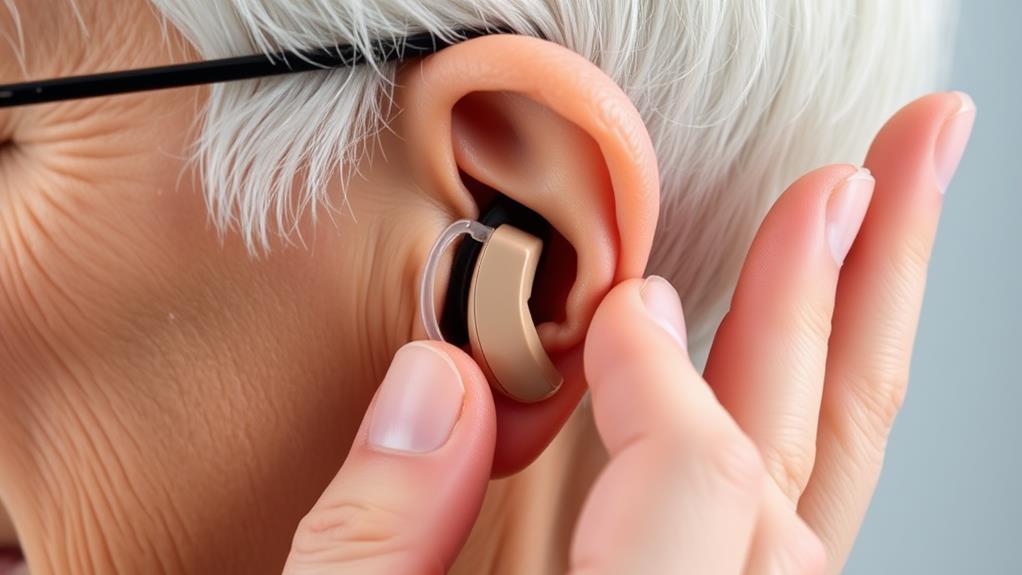
When it comes to hearing aids, proper fitting and adjustment are essential for your success. You’ve taken the first step by seeking help, but the journey doesn’t end there. Getting the most out of your hearing aids requires careful attention to detail and ongoing communication with your audiologist. From choosing the right professional to understanding your device’s settings, there’s a lot to reflect upon. These seven tips will guide you through the process, ensuring you’re well-equipped to navigate the world of hearing aids. But why is this information so important? The answer lies in the transformative power of well-fitted hearing aids and how they can dramatically improve your quality of life.
Key Takeaways
- Choose a qualified audiologist with proper credentials and experience in hearing aid fittings.
- Prepare for your fitting appointment by gathering medical records and documenting daily activities and challenges.
- Ensure proper ear mold fit by checking for gaps, whistling, and comfort during the fitting process.
- Understand and practice using volume controls and program settings for different listening environments.
- Schedule regular follow-up appointments for adjustments and to address any issues or changes in hearing needs.
Choose a Qualified Audiologist
Choose a Qualified Audiologist
When it comes to choosing a qualified audiologist, you’ll want to do your homework. Don’t just pick the first name that pops up on Google, folks! You’re dealing with your ears here, not choosing a new flavor of ice cream. First things first, check those audiologist qualifications. Look for someone with a doctorate in audiology (Au.D.) – that’s the gold standard. They should also be licensed in your state. It’s like making sure your pilot has a license before you hop on a plane. Makes sense, right?
Next up, audiologist experience is key. You wouldn’t want a newbie fiddling with your hearing aids, would you? Look for someone who’s been in the game for a while. Ask how many fittings they’ve done. If they start counting on their fingers, run for the hills!
Don’t be shy about asking questions. A good audiologist will explain things in plain English, not mumbo-jumbo. They should listen to your concerns and not rush you out the door. Remember, you’re the boss here. If something doesn’t feel right, trust your gut and keep looking. Your ears will thank you!
Prepare for Your Fitting Appointment
Alright, let’s get you ready for your hearing aid fitting – it’s not just about showing up! You’ll want to bring your medical records, including any previous hearing tests or ear-related treatments. Don’t forget to jot down your typical daily activities, from work calls to weekend hobbies, so your audiologist can fine-tune your aid for maximum oomph in real life. Additionally, be prepared to discuss any specific challenges you face in noisy environments, as advanced noise reduction can be a game-changer. Remember, comfort and ease of use are essential, so don’t hesitate to mention any preferences or concerns you have about the hearing aid’s fit or features.
Gather Medical Records
Gathering your medical records is an essential step in preparing for your hearing aid fitting appointment. Don’t worry, you won’t need to drag in a filing cabinet! Just round up the key documents that’ll give your audiologist the scoop on your ear situation.
First things first, dig up any records of hearing tests you’ve had. These little gems show your hearing loss history, and trust me, your audiologist will eat ’em up. Next, snag your medical history. It’s like a treasure map of your health journey, and it might reveal clues about your hearing loss. Got any ENT reports? Throw those in the mix too!
Consider checking out OTC devices as they are budget-friendly and might be an alternative to prescription models. Oh, and don’t forget about medications. Your audiologist needs to know what pills you’re popping, as some can affect your hearing. It’s like a weird game of “Guess Who?” but with drugs.
Lastly, if you’ve had any ear surgeries or treatments, grab those records too. They’re like the director’s cut of your ear saga. With all this info, your audiologist will be armed and ready to fit you with the perfect hearing aids. So, get collecting!
Note Daily Activities
Now that you’ve got your medical records in order, it’s time to turn your attention to your daily life. Buckle up, buttercup, because we’re diving into the thrilling world of daily routines and activity tracking! Grab a notebook or your fancy smartphone and get ready to become a stalker… of yourself.
For the next week, jot down everything you do. And we mean everything. Brushing your teeth? Write it down. Binge-watching your favorite show? Log those hours, couch potato! This isn’t just busywork, it’s essential intel for your audiologist.
Why? Because your daily activities affect how you’ll use your hearing aid. Do you spend hours on the phone? Work in a noisy factory? Enjoy underwater basket weaving? (Hey, we don’t judge!) Your audiologist needs to know.
Don’t forget to track your environments too. Are you constantly surrounded by screaming toddlers or purring cats? Do you frequent rock concerts or libraries? This info helps guarantee your aid is adjusted to handle your unique sonic landscape.
Ensure Proper Ear Mold Fit
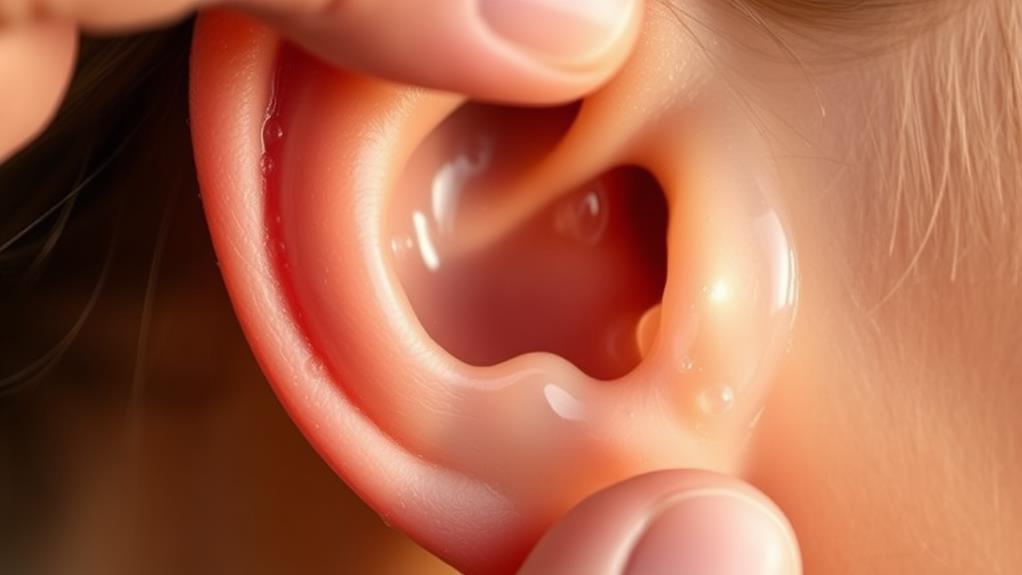
Ensuring proper ear mold fit is essential for ideal hearing aid performance and comfort. Your ear canal anatomy is as unique as your fingerprint, so one-size-fits-all doesn’t cut it here. You’ll want a custom mold that hugs your ear like a glove, made from mold materials that play nice with your skin. Think of it as a tailored suit for your ears – fancy, right?
Now, let’s get down to brass tacks. Here’s what you need to know about getting that perfect fit:
- Don’t be shy – wiggle that mold around to check for gaps
- If it whistles like a teakettle, it’s probably too loose
- Feeling like your ear’s in a vice grip? Too tight, my friend
- Watch out for that pesky feedback – it’s your mold’s way of throwing a tantrum
- When in doubt, consult your audiologist (they’re not just there to look pretty)
Understand Volume and Program Settings
You’ve got your hearing aid in place, but now what? Let’s tackle the magic buttons and dials that’ll make your world sound just right. First up, we’ll demystify volume control (spoiler alert: it’s not rocket science), and then we’ll explore program selection (because your aid’s got more tricks up its sleeve than a magician’s hat).
Volume Control Basics
Understanding the volume control and program settings is vital for effectively using your hearing aid. Let’s explore the basics of volume control, shall we? It’s not rocket science, but it’s essential for getting the most out of your fancy ear gadget.
First things first, your hearing aid’s volume control is like a personal sound DJ. It lets you crank up the tunes (or voices) when needed or dial it down when things get too noisy. But here’s the kicker: more volume doesn’t always mean better sound quality. It’s all about finding that sweet spot where everything’s clear without blasting your eardrums.
Here are some nifty volume control tips to keep in mind:
- Start low and work your way up
- Adjust for different environments (Grandma’s house vs. rock concert)
- Don’t be afraid to fiddle with it throughout the day
- Learn your hearing aid’s volume indicators (beeps, lights, etc.)
- Remember, louder isn’t always better
Most modern hearing aids come with cool features like automatic volume control. It’s like having a tiny sound engineer in your ear, constantly tweaking things for ideal hearing. Pretty neat, huh?
Program Selection Essentials
Now that you’ve got a handle on volume control, let’s shift gears to program selection. This isn’t rocket science, but it’s pretty darn important. Your hearing aid isn’t a one-trick pony – it’s got different programs for various situations. Think of it as your own personal DJ, mixing sound to suit your needs.
First things first, get to know your program types. You might have options for quiet environments, noisy restaurants, or even music listening. Each program tweaks your aid’s settings, like a sound equalizer on steroids. The feature differences between programs can be subtle or dramatic, so pay attention!
Switching between programs is usually as easy as pressing a button on your aid or remote. But here’s the kicker – you’ve got to use the right program at the right time. Don’t be that person blasting the “noisy restaurant” setting in a library. Talk about awkward!
Experiment with your programs in different environments. It’s like trying on clothes – what looks good in the store might not work for a night out. Trust your ears and don’t be shy about asking your audiologist for help. They’re not mind readers, you know!
Practice Inserting and Removing Aids
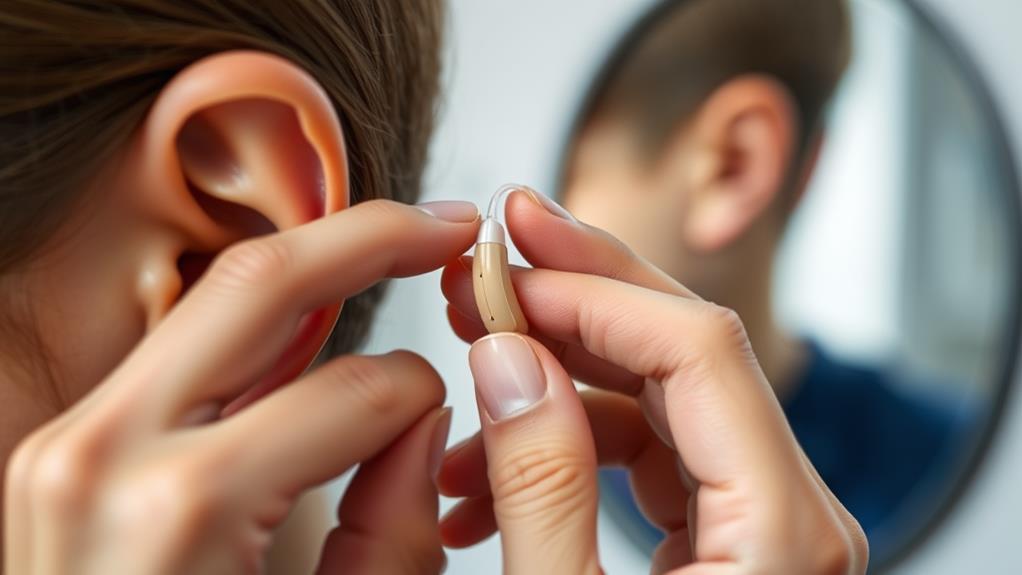
Regular practice is essential for mastering the insertion and removal of hearing aids. You’ll want to become a pro at this, trust me. It’s like learning to tie your shoes – awkward at first, but soon you’ll be doing it in your sleep. Let’s explore some nifty insertion techniques and removal strategies that’ll make your life easier.
Here’s a quick list to keep in mind:
- Always wash your hands first (duh, but you’d be surprised)
- Find a comfy spot with good lighting
- Keep a mirror handy for those tricky angles
- Have a safe place to set your aids when not in use
- Don’t rush – slow and steady wins the race
Now, let’s talk insertion. Grab that aid like it owes you money, but gently. You’re not trying to squeeze juice from it. Aim for the ear canal, and slide it in smoothly. If it feels like you’re stuffing a square peg in a round hole, stop and readjust. For removal, don’t yank it out like you’re starting a lawnmower. Grip it firmly and ease it out with a slight twisting motion. Voila! You’re on your way to hearing aid mastery.
Schedule Regular Follow-up Appointments
A calendar marked with hearing aid checkups is your roadmap to ideal auditory health. Don’t slack off on these appointments, folks! They’re not just a chance to sip stale waiting room coffee and flip through outdated magazines. Nope, these follow-ups are essential for keeping your ears in tip-top shape.
Your audiologist isn’t just there to admire your stylish new aids. They’ll tweak and tune those bad boys to perfection, ensuring you’re not missing out on life’s symphony (or your neighbor’s off-key karaoke). Plus, they’ll catch any sneaky changes in your hearing health before they become a full-blown problem.
Got lifestyle adjustments? Maybe you’ve taken up underwater basket weaving or decided to become a human cannonball. Your audiologist needs to know! They’ll adjust your aids to match your new, thrilling (or questionable) life choices.
Communicate Feedback to Your Provider
Your hearing aid provider isn’t a mind reader, so don’t expect them to guess your needs. It’s up to you to spill the beans about what’s working and what’s not. Effective communication is key to getting your aids just right. Don’t be shy – your provider’s seen it all, and they’re there to help.
Here are some nifty feedback methods to keep in your back pocket:
- Keep a daily journal of your hearing experiences
- Use a rating system for different environments (1-10)
- Record voice memos describing specific issues
- Take photos of tricky listening situations
- Bring a friend or family member to appointments for support
Conclusion
You’ve got this! Remember, getting your hearing aids just right is a team effort. Don’t be shy – speak up if something’s not quite right. Your audiologist isn’t a mind reader, after all. Keep tweaking, practicing, and following up. It might take a bit of time, but soon you’ll be hearing like a champ. And hey, who knows? Maybe you’ll even start to enjoy those family dinners again. Stay persistent, stay positive, and keep your ears open!