
If you're a senior dealing with tinnitus, you're not alone. This common condition affects millions, causing ringing, buzzing, or other sounds in the ear without an external source. Fortunately, hearing aids can offer significant relief by amplifying external sounds that distract from internal noise. With advanced features like noise reduction and Bluetooth connectivity, these devices not only enhance auditory experiences but also improve communication. Let's explore how hearing aids can help you manage tinnitus effectively and improve your quality of life.
Key Takeaways
- Hearing aids manage tinnitus in seniors by amplifying external sounds, distracting from internal noises, and providing relief from persistent ringing or buzzing.
- Advanced features like noise reduction, speech recognition, and Bluetooth technology enhance sound quality, making conversations easier for seniors with tinnitus.
- Customizable settings and apps allow seniors to personalize their hearing aids for different environments, offering flexibility and control over tinnitus management.
- Choosing the right hearing aid involves assessing specific audiology needs, considering factors like discreetness, connectivity, and the necessity of directional microphones.
- Regular cleaning, protective storage, and dehumidification are essential for maintaining hearing aids and ensuring optimal performance in managing tinnitus for seniors.
Benefits of Bluetooth Hearing Aids
Bluetooth hearing aids offer numerous benefits for seniors, considerably enhancing their listening experience. You'll love the wireless convenience that comes with these devices – no more pesky cords to deal with. But that's not all – Bluetooth hearing aids also boast impressive streaming capabilities. Imagine being able to stream your favorite TV shows, phone calls, and music directly into your hearing aids. It's like having your own personal soundtrack.
With Bluetooth hearing aids, you can take hands-free phone calls, making it easier to stay connected with loved ones. You can also stream audio from your phone or tablet, giving you access to a world of entertainment and information. Plus, many Bluetooth hearing aids come with apps that allow you to adjust settings and customize your listening experience. It's like having a personal audio assistant at your fingertips. Overall, Bluetooth hearing aids are a game-changer for seniors, offering a more convenient, connected, and enjoyable listening experience. So why not give them a try? Your ears (and your loved ones) will thank you.
Types of Hearing Aids Available
Choose from a variety of hearing aids available that cater to different needs and preferences. You've got in-ear devices that are super discreet, behind-ear models that are easy to handle, and rechargeable options that save you from constant battery swaps. Many hearing aids come with programmable settings that you can adjust according to your environment—whether you're in a quiet room or a noisy restaurant. Noise cancellation features are also a lifesaver, helping you focus on the sounds you want to hear. With wireless connectivity, you can stream music, podcasts, and even TV shows directly into your hearing aids.
Some hearing aids offer custom molds for a snug fit, while others boast digital processing for clear sound. User-friendly interfaces make it easy to control your settings without needing a degree in tech. Budget considerations? Don't worry, there are options ranging from affordable to premium. The key is finding the right balance for your needs and wallet. Whether you're dealing with tinnitus or just need a little help hearing, there's a hearing aid out there for you.
Tinnitus Management With Hearing Aids

You're probably wondering how hearing aids can help with that annoying ringing in your ears, known as tinnitus. Here's the thing: hearing aids can be a game-changer for tinnitus management, as they help your brain focus on external sounds rather than the internal noise. By choosing the right hearing aid with tinnitus management features, you can reduce stress and alleviate those pesky tinnitus symptoms.
How Hearing Aids Help
Hearing aids have been a cornerstone in managing tinnitus for many seniors, providing significant relief from the persistent ringing, buzzing, or hissing sounds. If you're a senior dealing with tinnitus, you might be wondering how these devices can help you. The answer lies in sound amplification, an essential feature of hearing aids that can offer considerable tinnitus relief.
Think of it like this: your brain is constantly trying to fill in the gaps caused by hearing loss, and that's when the phantom sounds of tinnitus kick in. Hearing aids help by amplifying external sounds, making them louder and clearer. This doesn't just help you hear better; it also distracts your brain from the internal noises of tinnitus. It's like turning up the volume on your favorite TV show to drown out the background noise.
Quality hearing aids can be a game-changer, providing customizable programs and advanced sound-processing capabilities. Whether you opt for prescription-grade devices or over-the-counter options, these tools can help manage your tinnitus symptoms effectively. So, if tinnitus has been driving you crazy, it might be time to give hearing aids a try. They could be the solution you've been waiting for.
Choosing the Right Aid
Managing tinnitus with hearing aids involves more than just sound amplification; it requires selecting a device that meets your specific needs. You need to find a hearing aid that not only amplifies sound but also has features that can help manage your tinnitus.
- Programmability: Choose a hearing aid that can be programmed to your hearing loss profile. This guarantees a more precise and comfortable hearing experience.
- Tinnitus Management Apps: Opt for devices with built-in tinnitus management apps. These apps can help mask tinnitus sounds and provide relief.
- Rechargeability: Consider hearing aids with rechargeable batteries. This eliminates the hassle of frequent battery replacements.
- Directional Microphones: Look for hearing aids with directional microphones. These help focus on sounds from the front while reducing background noise.
- Bluetooth Connectivity: Ascertain your hearing aid has Bluetooth connectivity. This allows for seamless adjustments using your smartphone or tablet, enhancing your communication experience.
Choosing the Right Hearing Aid
Choosing the right hearing aid for seniors is an essential step in restoring their hearing health and improving their overall quality of life. Let's face it, with a plethora of options out there, it can be overwhelming. But don't worry, we have you taken care of. When it comes to hearing aid features, you need to reflect on what matters most to you. Do you want something discreet, or are you okay with a bit more visibility? Do you need Bluetooth connectivity to stream your favorite shows, or are you good with just the basics?
Think about senior audiology needs – like ease of use and clear sound quality. You might want to opt for a hearing aid with directional microphones to help cut down on background noise. And don't forget about the battery life – you don't want to be stuck with a dead battery in the middle of a conversation. Contemplate rechargeable options or ones with long-lasting batteries. The right hearing aid can make all the difference in your daily life, so take your time and do your research.
Bluetooth Technology for Seniors

You're probably wondering how Bluetooth technology can supercharge your hearing aids. Well, here's the deal – Bluetooth hearing aids let you connect wirelessly to your phone, TV, and other devices, making it easier to hear and control the sound around you. With Bluetooth, you can stream audio directly to your hearing aids, adjust settings with a smartphone app, and even take hands-free calls – it's like having your own personal sound engineer in your pocket
Bluetooth Hearing Aid Benefits
The integration of Bluetooth technology into hearing aids has markedly enhanced the listening experience for seniors. With Bluetooth hearing aids, you can enjoy a seamless audio streaming experience directly from your smart devices. This wireless convenience lets you stream your favorite music, podcasts, or audiobooks without the need for additional earbuds.
Here are some benefits you'll love about Bluetooth hearing aids:
- Wireless freedom: No more tangled cords or lost earbuds. Enjoy your audio wirelessly and hassle-free.
- Easier listening: Hear every word and every note more clearly. Bluetooth hearing aids are designed to help you pick up on different instruments and voices.
- Customizable sound: Many apps allow you to adjust the equalizer settings for your music. Get the perfect listening experience every time.
- Convenience: Stream your favorite shows and movies directly to your hearing aids. No more juggling remotes or dealing with loud TVs.
- Tinnitus relief: Use Bluetooth hearing aids to stream soothing sounds or music to help manage tinnitus. Enjoy some peace and quiet in your life.
Enhancing Sound Quality
Bluetooth technology plays a crucial role in enhancing sound quality for seniors using hearing aids. It's like having a personal sound engineer in your ear, making sure you catch every word, every laugh, and every important detail. With Bluetooth, you can stream audio directly from your phone, TV, or computer to your hearing aids, giving you unparalleled sound clarity. Imagine being able to hear your grandkids' voices clearly over the phone, or enjoying your favorite TV show without straining to understand the dialogue. It's a game-changer for seniors who want to stay connected and engaged.
But that's not all – Bluetooth technology also offers advanced auditory enhancement features like noise reduction and speech recognition. These features help to separate speech from background noise, making it easier to focus on the conversation. And with the ability to control your hearing aids through a mobile app, you can adjust settings on the fly to suit your environment. Whether you're in a noisy restaurant or a quiet living room, Bluetooth technology helps you hear with confidence and clarity.
Connectivity and Control
Harnessing the power of Bluetooth technology, seniors can seamlessly connect their hearing aids to various devices, revolutionizing their auditory experience. With Bluetooth-enabled hearing aids, you can easily control the volume, switch between devices, and even use remote control features through your smartphone. This level of connectivity and control provides a more personalized and convenient listening experience.
Here are some key features to look for in Bluetooth-enabled hearing aids for seniors with tinnitus:
- Remote Control: Manage your hearing aids from your smartphone or a dedicated remote.
- App Integration: Customize settings, track usage, and adjust sound preferences through user-friendly apps.
- Multi-Device Streaming: Switch between your phone, TV, and computer with ease.
- Telehealth Services: Receive remote adjustments and fittings from audiologists.
- Enhanced Sound Quality: Enjoy clearer, more natural sound with advanced noise reduction and feedback control.
These features not only enhance sound quality but also provide a more intuitive and convenient way to manage your hearing aids, making them perfect for seniors looking to improve their auditory experience.
Enhancing Auditory Experiences
As you navigate the complexities of aging, enhancing auditory experiences becomes essential for maintaining a high quality of life. Let's face it, hearing loss can be a real bummer, especially when it's paired with tinnitus – that annoying ringing in your ears. But here's the thing: sound amplification can be a total game-changer. By boosting the volume of external sounds, you can improve your auditory clarity and make conversations a whole lot easier.
Hearing aids are a fantastic way to do just that. They're like having your own personal sound engineer, tweaking the levels to make everything sound crystal clear. And the best part? They can help distract you from that pesky tinnitus. Research shows that around 60% of people with tinnitus find some relief when wearing hearing aids, and about 22% experience significant relief. So, don't be afraid to crank up the volume and take control of your auditory experiences. Your ears (and your sanity) will thank you.
Care and Maintenance Tips
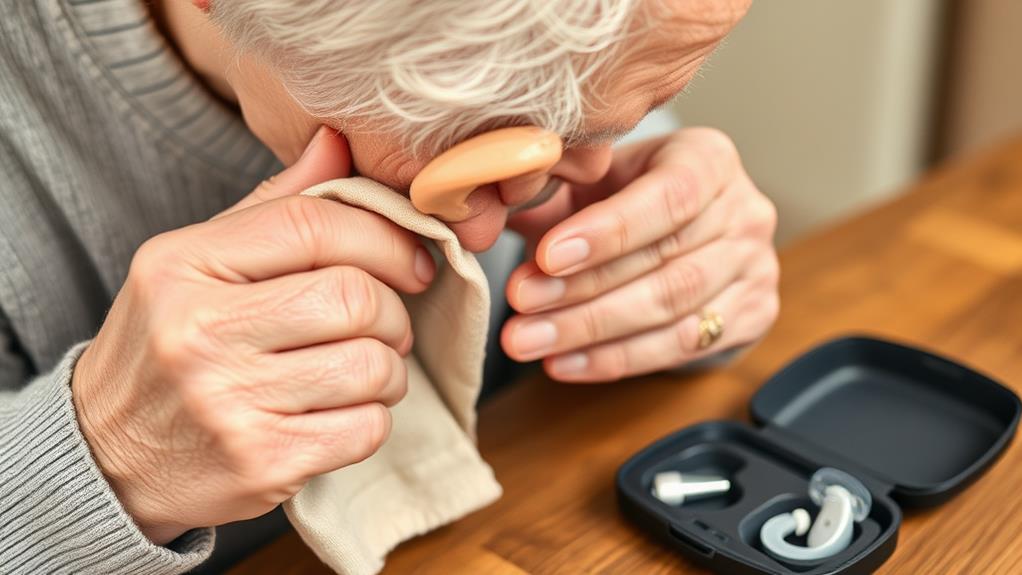
To keep your hearing aids in top condition, you need to clean and maintain them regularly. Here's how you can do it:
- Clean the outer casing with a soft cloth and avoid using harsh chemicals or water.
- Use a cleaning brush to remove earwax and debris from the microphone and receiver vents.
- Dry your hearing aids at night with a dehumidifier to prevent moisture buildup.
- Store your hearing aids in a protective case when not in use to prevent damage.
- Check your hearing aids regularly for signs of wear and tear, such as frayed wires or broken parts.
Proper battery care is also important. Always handle batteries with dry hands and store them in a cool, dry place. Avoid mixing old and new batteries or using batteries that are past their expiration date. By following these cleaning techniques and battery care tips, you can extend the life of your hearing aids and keep them working at their best. This will guarantee that you continue to hear clearly and enjoy the benefits of your hearing aids.
Overcoming Common Challenges
Keeping your hearing aids clean and well-maintained is just the first step towards enjoying clear and uninterrupted hearing. Now, let's tackle the common challenges you might face. Sound sensitivity can be a real issue for seniors with tinnitus. To overcome this, consider using hearing aids with features that help manage background noise and reduce sound sensitivity. This can make a huge difference in your daily life, especially in noisy environments.
Another challenge is the emotional impact of hearing loss. It's not just about hearing; it's about feeling connected and engaged. Hearing aids can help you regain that sense of connection, but it's important to address any emotional barriers that might be holding you back. Don't be afraid to talk to your audiologist about your concerns and feelings. They're there to help you, not just your hearing.
Lastly, don't underestimate the power of practice and patience. Getting used to hearing aids takes time, so be gentle with yourself and keep working at it. With the right mindset and support, you can overcome common challenges and enjoy better hearing.
Personalized Listening Options

How can you tailor your hearing aids to meet your unique listening needs? With personalized listening options, you can enhance your overall experience. Here are some ways to do it:
- Custom Soundscapes: Create soundscapes that mimic your favorite environments, such as a quiet forest or a bustling city.
- Adaptive Settings: Use adaptive settings to automatically adjust your hearing aids based on your surroundings.
- Customizable App: Use a customizable app to personalize your listening experience, with options to adjust volume, tone, and more.
- Manual Overrides: Get a brand that offers manual overrides, so you can fine-tune your settings anytime.
- Remote Controls: Consider a remote control accessory for easier adjustments.
Conclusion
You've got this – hearing aids can be a game-changer for seniors dealing with tinnitus. They amplify external sounds, distracting you from that annoying internal noise. With advanced features like noise reduction and Bluetooth connectivity, you can enhance your auditory experiences and communicate more effectively. Choose the right hearing aid, follow some simple care tips, and you'll be managing tinnitus like a pro. Your quality of life is about to get a serious upgrade.